
Quick answer: To clean out a basement, start by assessing what’s there and identifying anything with moisture damage or safety concerns, then sort everything into keep, donate, sell, and toss piles — working from the back of the space toward the exit. Schedule junk removal before you start so the haul-away is booked by the time sorting is done. In Livermore and the East Bay, Junk Removal Now offers same-day and next-day basement cleanout service, handling all the heavy lifting from inside the home.
Basements have a way of becoming the default destination for everything that doesn’t have a better place to go. Exercise equipment that seemed like a great idea, holiday decorations from three homes ago, boxes that haven’t been opened since the last move, furniture that’s too good to throw away but too uncomfortable to use. If this sounds familiar, you’re not alone, and the cleanout is more manageable than it probably looks from the top of the stairs.
Here’s how to approach it step by step.
Before You Start: Safety First
Basements have specific safety considerations that garages and attics don’t. Before pulling anything out, do a quick walkthrough with these in mind:
Moisture and mold: If there’s visible mold growth on items or walls, do not disturb it without proper protective gear — a basic N95 mask at minimum. Significant mold growth on the structure itself should be assessed by a licensed remediation professional before a cleanout proceeds.
Structural concerns: Old shelving, freestanding storage units, and stacked items can be unstable. Don’t pull from the bottom of stacked piles without stabilizing from the top first.
Pests: Basements that have been undisturbed for years are prime habitat for rodents and insects. Look for droppings, nesting material, and chewed boxes before handling items barehanded. If you find evidence of an active infestation, address it with a pest control company before the cleanout.
Hazardous materials: Old basements, particularly in homes built before 1980 — may contain items like old paint cans, solvents, automotive fluids, and other hazardous household waste. Set these aside separately during sorting for proper HHW disposal.
A quick walkthrough with these in mind takes ten minutes and prevents the cleanout from becoming a bigger problem than you started with.
Step 1: Map the Space Before You Touch Anything
Before moving a single box, walk through the basement and get a mental map of what’s there and roughly how much volume you’re dealing with. This helps you:
- Estimate how long the cleanout will take
- Decide whether you need a full truckload or a partial load for haul-away
- Identify any large or heavy items (old appliances, furniture, equipment) that will need special handling
- Plan the order in which to tackle sections
Basements with decades of accumulation are often better approached in phases — not because each phase is smaller, but because working with a clear floor space makes subsequent phases faster and safer.
Step 2: Create a Staging Area Outside the Basement
Unlike a garage, a basement has a fixed exit point, the stairs, and limited floor space for sorting. Create staging areas upstairs, in the garage, or in the driveway where sorted piles can land without clogging the workspace.
Designate physical spaces for each pile:
- Keep — items going back into the basement in an organized way, or to another room
- Donate — clean, usable items for charity
- Sell — items with real resale value
- Junk removal — everything that’s going out
Move items to their designated staging area immediately rather than creating intermediate piles on the basement floor.
Step 3: Work Back to Front
Start at the far end of the basement — furthest from the stairs — and work toward the exit. This keeps your path out clear as you go, prevents you from having to move sorted piles a second time, and ensures you don’t miss anything in the back corners.
The back of most basements is where the oldest, most forgotten items live. Starting there often surfaces items that make the decision easier about everything else, if you haven’t touched something in ten years, the decision about newer items becomes clearer by comparison.
Step 4: Sort Ruthlessly, the Basement Trap
Basements have a specific psychological trap: because they’re out of sight, items feel less urgent to decide about, and “I’ll figure this out later” items accumulate. The cleanout is the time to break that cycle.
Useful filters for basement items specifically:
“Would I have bought storage space to keep this if it couldn’t go in the basement?” Most things in a cluttered basement exist there because the storage was free, not because the items are worth keeping. If you’d pay to store it elsewhere, keep it. If not, it goes.
“Does this belong to a version of my life that’s passed?” Exercise equipment from a fitness phase, hobby supplies from an abandoned hobby, children’s items from a stage that’s clearly over, these are some of the most common basement space-consumers and the hardest to let go of. They go.
“If I needed this, would I know it was here?” If you’ve forgotten an item exists until this moment, the odds are good that you’ll forget it again after the cleanout. If you can’t retrieve it reliably, storing it isn’t providing any value.
Step 5: Handle Old Appliances and Large Items First
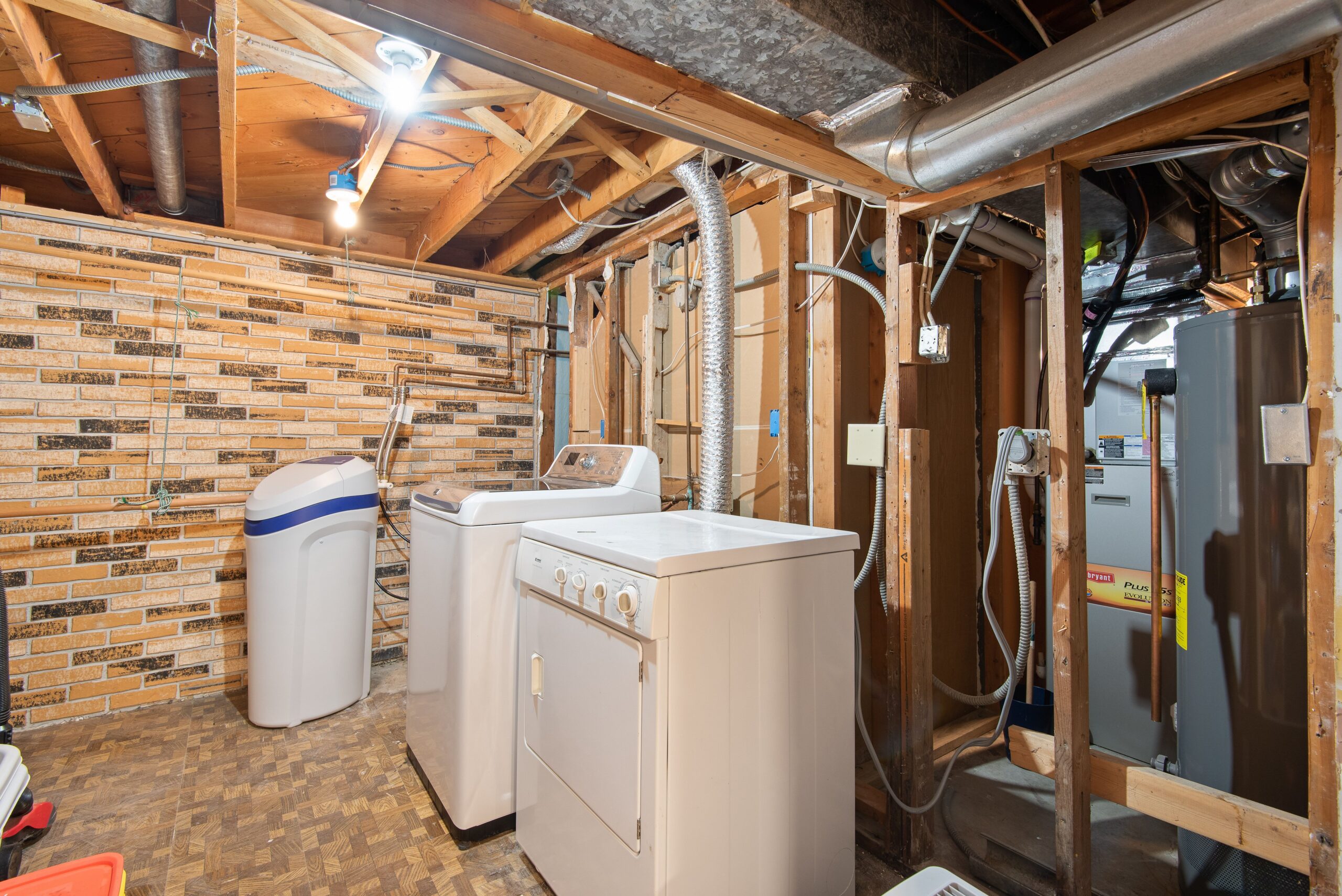
Most cluttered basements have at least a few large, heavy items, old refrigerators, chest freezers, washing machines, water heaters, exercise equipment, old furniture, that can’t be moved by one person and create logistical challenges during the cleanout.
Identify these items during your initial walkthrough (Step 1) and flag them for the junk removal crew at booking time. A crew that knows large appliances or heavy equipment are involved can bring the right tools and enough people for safe removal.
Large items removed first open up floor space that makes the rest of the cleanout significantly faster.
Step 6: Sort and Handle Hazardous Materials Separately
As you sort, set aside anything that qualifies as hazardous household waste, paint, solvents, chemicals, automotive fluids, old batteries, fluorescent bulbs, in one designated spot, separate from the junk removal pile.
These items cannot go in a junk removal load and must be taken to an Alameda or Contra Costa County HHW facility for proper disposal. Alameda County’s StopWaste program offers free resident drop-off; Contra Costa County operates HHW facilities in Pittsburg and Martinez.
Step 7: Schedule Junk Removal for the Toss Pile
Here’s where most basement cleanouts stall: the toss pile is assembled, and nobody has a plan for actually getting it out of the house.
The most effective approach is to book junk removal before you start sorting, not after the pile is made. Knowing a crew is coming on a specific day creates a real deadline and prevents the “I’ll figure it out later” mentality from creeping back in.
Junk Removal Now hauls directly from the basement, no requirement to stage items at the curb or at the top of the stairs. The crew works through the exit you have, carries items out, and loads the truck.
Step 8: Clean and Reorganize What’s Left
Once everything leaving the basement is gone, give the empty space a proper clean:
- Sweep and vacuum the floor thoroughly, including corners and under shelving
- Wipe down shelves, storage units, and walls
- Check for moisture in corners and along the base of walls, address any water intrusion before reorganizing
- Let the space air out, especially if it’s been sealed for a long time
Bring the keep pile back in intentionally:
- Label everything that goes back in storage
- Keep frequently accessed items near the stairs, seasonal items further back
- Store everything in sealed bins rather than open boxes to protect from moisture and pests
- Leave walking paths clear so you can access the whole space without moving things
A basement cleaned and reorganized from scratch stays organized, unlike one that was just tidied around the edges of the accumulation.
What Junk Removal Now Hauls From Basements
- Old appliances, refrigerators, freezers, washers, dryers, water heaters
- Furniture, sofas, chairs, tables, bed frames, shelving units
- Mattresses and box springs
- Electronics and TVs of all sizes
- Exercise equipment, treadmills, ellipticals, weight sets, stationary bikes
- Boxes of miscellaneous items (no need to sort or unpack)
- Old tools and equipment
- Holiday decorations and storage bins (contents included)
- Construction debris and renovation remnants
- Scrap metal and miscellaneous hardware
Serving Livermore, Dublin, Pleasanton, Oakland, Fremont, Hayward, Concord, Walnut Creek, Antioch, and all of Alameda and Contra Costa County.
Frequently Asked Questions
How long does a basement cleanout take? A typical single-car basement or utility basement takes 2–4 hours to sort and stage. A finished basement used as storage for many years may take a full day. Adding a professional junk removal crew means the haul-away portion is usually under an hour regardless of volume.
Does the junk removal crew carry items up the stairs? Yes. The crew handles all the carrying, from wherever items are in the basement, up the stairs, and out to the truck. You don’t need to move anything before they arrive.
What if my basement has mold? Minor surface mold on items being discarded is manageable with basic protective gear. Significant mold growth on the basement structure (walls, framing, floor) should be assessed by a licensed remediation professional before proceeding with a cleanout.
Can junk removal take old exercise equipment from a basement? Yes. Treadmills, ellipticals, weight benches, and stationary bikes are among the most common basement cleanout items. They’re bulky and heavy — exactly the kind of thing a professional crew handles more efficiently than attempting it solo.
Do I need to bag or box items before the crew arrives? No. Loose items, open shelving, and unsorted piles are all fine. The crew assesses and loads on-site — you don’t need to prep anything beyond having decided what’s going.
How is a basement cleanout priced? Pricing is based on the volume your items occupy in the truck. Junk Removal Now provides a free, firm on-site quote before any work begins, with no hidden fees. The price-match guarantee applies to any written estimate from a licensed, bonded, and insured competitor.
Can you do a basement cleanout the same day? Yes, same-day and next-day service is available throughout Livermore and the East Bay, subject to availability. Call (925) 400-3800 to check same-day slots.
Ready to finally tackle that basement? Book your free cleanout quote online or call (925) 400-3800. Junk Removal Now handles all the heavy lifting — from deep in the basement, up the stairs, and out the door, with same-day service available across Livermore, Dublin, Pleasanton, and all of Alameda and Contra Costa County.